Round Elastic vs Flat Elastic: Which One Should You Choose?
Round and flat elastic perform the same broad function—controlled stretch—but distribute force and integrate into products differently. Form should be chosen from the assembly and end use.
Custom color & sizeDirect manufacturer contactFast quotation process
Comparison
ComparisonUpdated: Aug 29, 2026Bilge Örme Technical Content Team
30-SECOND SUMMARY
Quick answer: round elastic vs flat elastic
Round elastic works well in channels, eyelets and cord-lock systems.
Flat elastic offers a broader contact surface and is often sewn directly into garments.
The final assembly should determine the form rather than habit or availability.
Round and flat elastic perform the same broad function—controlled stretch—but distribute force and integrate into products differently. Form should be chosen from the assembly and end use. This guide is designed to help purchasing, product-development and production teams separate the key technical criteria and move directly to the relevant Bilge Örme product pages.
How does the shape change performance?
Round cord concentrates tension through a compact cross-section and moves easily through many channels. Flat elastic spreads tension across a wider surface and can provide a smoother contact area against fabric or skin.
When is round elastic preferred?
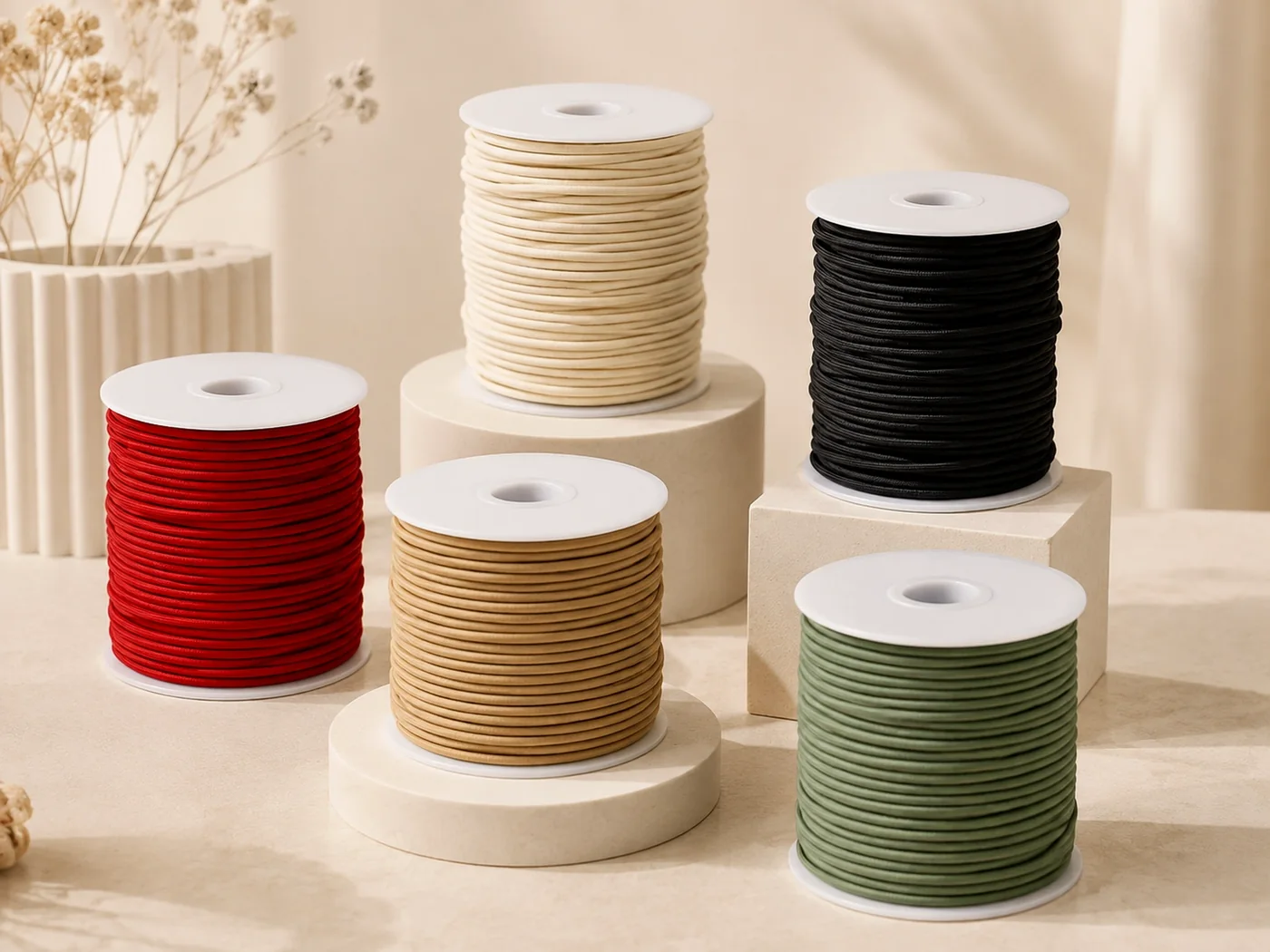
Round elastic cord is common in drawcord systems, bags, footwear, sportswear, outdoor products and assemblies using cord locks or small openings.
When is flat elastic preferred?
Flat elastic is widely used in apparel, waistbands, cuffs, underwear and sewn channels where a broad, low-profile contact surface is useful.
What about comfort and visibility?
Flat elastic can distribute pressure more broadly in skin-contact zones, while round cord can be visually prominent as a design detail. Surface, color and construction still need to be evaluated within each form.
How to make the final decision
Prototype both forms when the application could accept either. Compare sewing or hardware fit, user comfort, adjustment, recovery and appearance before committing to production.
TECHNICAL NOTE
A product name alone does not guarantee technical equivalence.
Size, surface, working stretch, recovery, sewing or connection method and the final operating conditions should be evaluated together. When replacing an existing component, a physical sample and real use case provide the strongest reference.
Not inherently. Strength and recovery depend on construction, size and material, not shape alone.
Can flat elastic be used with cord locks?+
Usually cord locks are designed for round or specific cord profiles; hardware compatibility should be checked rather than assumed.
Which form is better for skin contact?+
Flat elastic often distributes pressure over a wider area, but surface softness and recovery remain important.
CONTENT OWNERBilge Örme Technical Content Team
Our content is prepared around Bilge Örme product families and production-focused field experience to support better product selection. Order-specific technical values should be confirmed against the sample and project conditions. Review our technical content policy and production and quality approach.
This content is for general technical guidance. Final product suitability, production construction and performance values may vary according to order conditions and sample approval.