How does flat elastic work?
Flat elastic combines textile yarns and an elastic element in a tape-like construction. Its broad surface helps distribute tension and makes it suitable for sewing into channels, edges and garment components.
Flat elastic is a ribbon-like elastic construction used when a broad contact surface and controlled stretch are needed. Width, recovery, sewing channel and skin contact are key selection criteria.
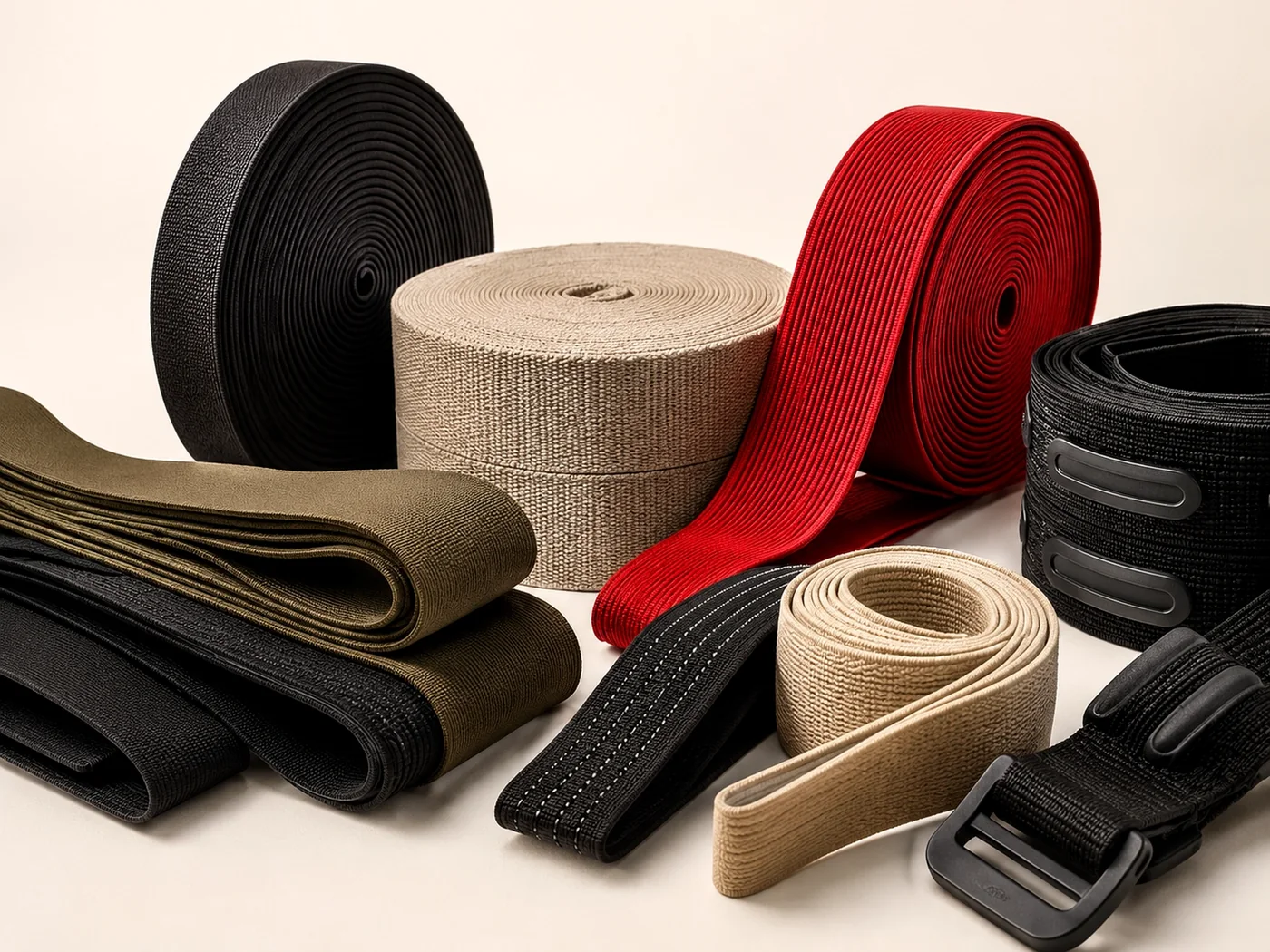
Flat elastic is a ribbon-like elastic construction used when a broad contact surface and controlled stretch are needed. Width, recovery, sewing channel and skin contact are key selection criteria. This guide is designed to help purchasing, product-development and production teams separate the key technical criteria and move directly to the relevant Bilge Örme product pages.
Flat elastic combines textile yarns and an elastic element in a tape-like construction. Its broad surface helps distribute tension and makes it suitable for sewing into channels, edges and garment components.
Bilge Örme offers product families around 3 mm, 5 mm, 7 mm and 10 mm. The correct width depends on the channel, contact area and visual design.
Applications include apparel, underwear, childrenswear, accessories, masks, light technical textiles and sewn assemblies that require a low-profile elastic component.
Stretch force, recovery, surface feel, edge stability, color and winding format can all affect the finished product. Two 5 mm elastics can behave differently even if their nominal width matches.
Test the selected elastic with the final stitch, channel and garment prototype. Then confirm color, spool length, packaging and recurring supply needs so the production format matches your operation.
Size, surface, working stretch, recovery, sewing or connection method and the final operating conditions should be evaluated together. When replacing an existing component, a physical sample and real use case provide the strongest reference.
Neither form is universally stronger; they distribute force differently and must be selected for the application.
Choose a width that fits the sewing channel and provides the required contact area and comfort.
Winding and packaging options can be evaluated according to the product and order plan.
Our content is prepared around Bilge Örme product families and production-focused field experience to support better product selection. Order-specific technical values should be confirmed against the sample and project conditions. Review our technical content policy and production and quality approach.
Talk directly with the manufacturer about recurring production, custom colors, winding and packaging requirements.