How is round elastic constructed?
Round elastic typically uses an elastic core surrounded by braided textile yarns. The cover protects the core, controls surface friction and contributes to the final diameter, color and feel of the cord.
Round elastic cord combines an elastic core with a braided textile cover to create a compact, flexible construction. Diameter, recovery, surface and compatibility with channels or cord locks determine the correct product.
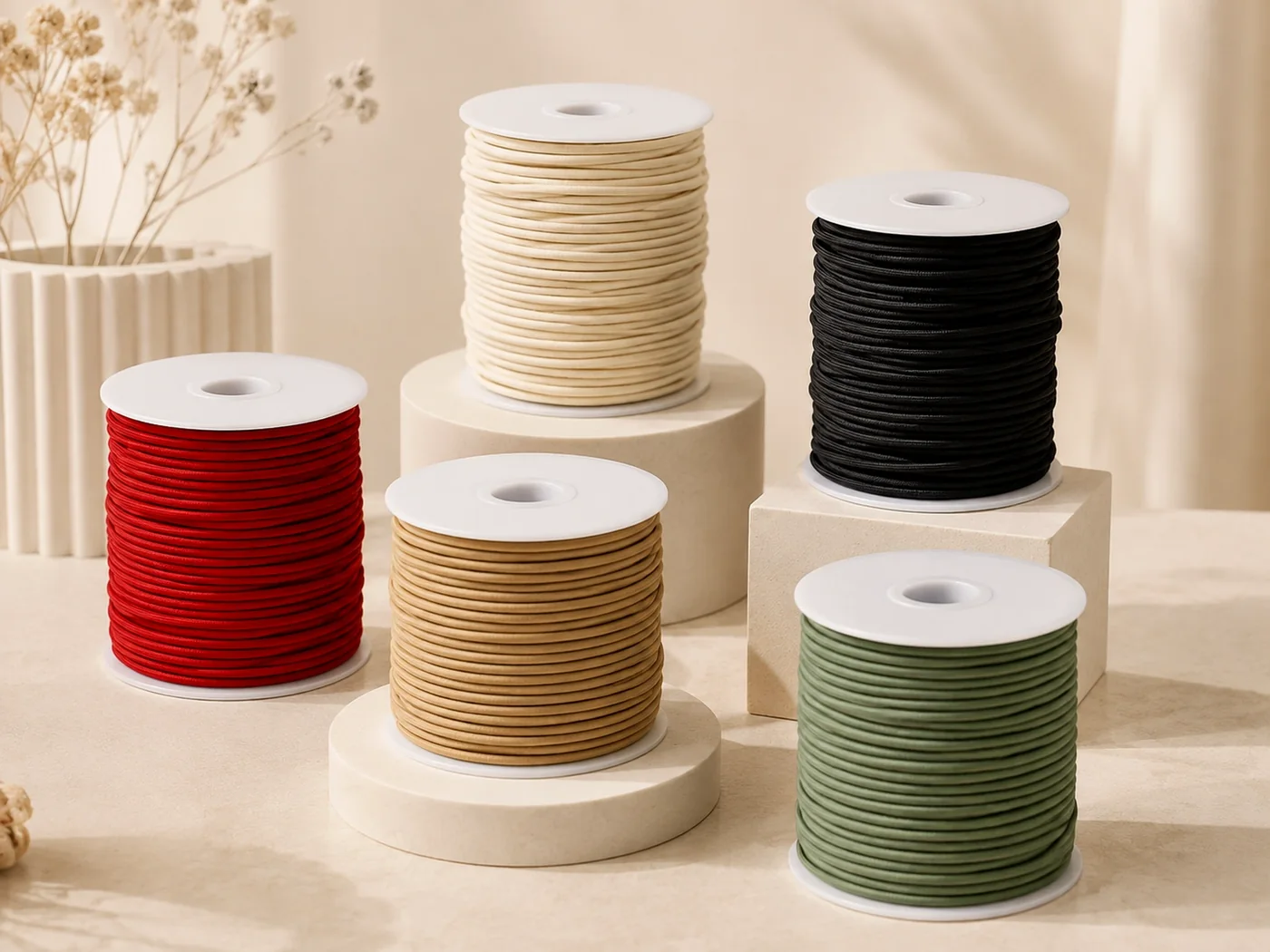
Round elastic cord combines an elastic core with a braided textile cover to create a compact, flexible construction. Diameter, recovery, surface and compatibility with channels or cord locks determine the correct product. This guide is designed to help purchasing, product-development and production teams separate the key technical criteria and move directly to the relevant Bilge Örme product pages.
Round elastic typically uses an elastic core surrounded by braided textile yarns. The cover protects the core, controls surface friction and contributes to the final diameter, color and feel of the cord.
Terms such as 5, 10, 15, 20 and 30 strand help identify product classes, but they should not be treated as universal diameter standards. Actual diameter and mechanical behavior should be checked on the manufacturer’s sample.
Common applications include apparel adjustments, bags, footwear, sportswear, outdoor products, luggage and technical fastening. For projects with hardware, see cords and accessories to evaluate the complete system.
Visible cords often become part of the design language. Yarn choice and braid density influence the perceived color, sheen and friction, which can also affect how the cord runs through a cord lock.
Provide target diameter, color, working stretch, end use, hardware details and estimated quantity. If matching an existing cord, send a physical sample to compare diameter, recovery and surface rather than relying on strand count alone.
Size, surface, working stretch, recovery, sewing or connection method and the final operating conditions should be evaluated together. When replacing an existing component, a physical sample and real use case provide the strongest reference.
No. Strand count is a product-class reference; actual diameter depends on yarns and construction.
Yes, color options can be evaluated according to yarn, quantity and project conditions.
Test the actual cord diameter and surface with the intended cord lock under realistic tension.

Our content is prepared around Bilge Örme product families and production-focused field experience to support better product selection. Order-specific technical values should be confirmed against the sample and project conditions. Review our technical content policy and production and quality approach.
Talk directly with the manufacturer about recurring production, custom colors, winding and packaging requirements.