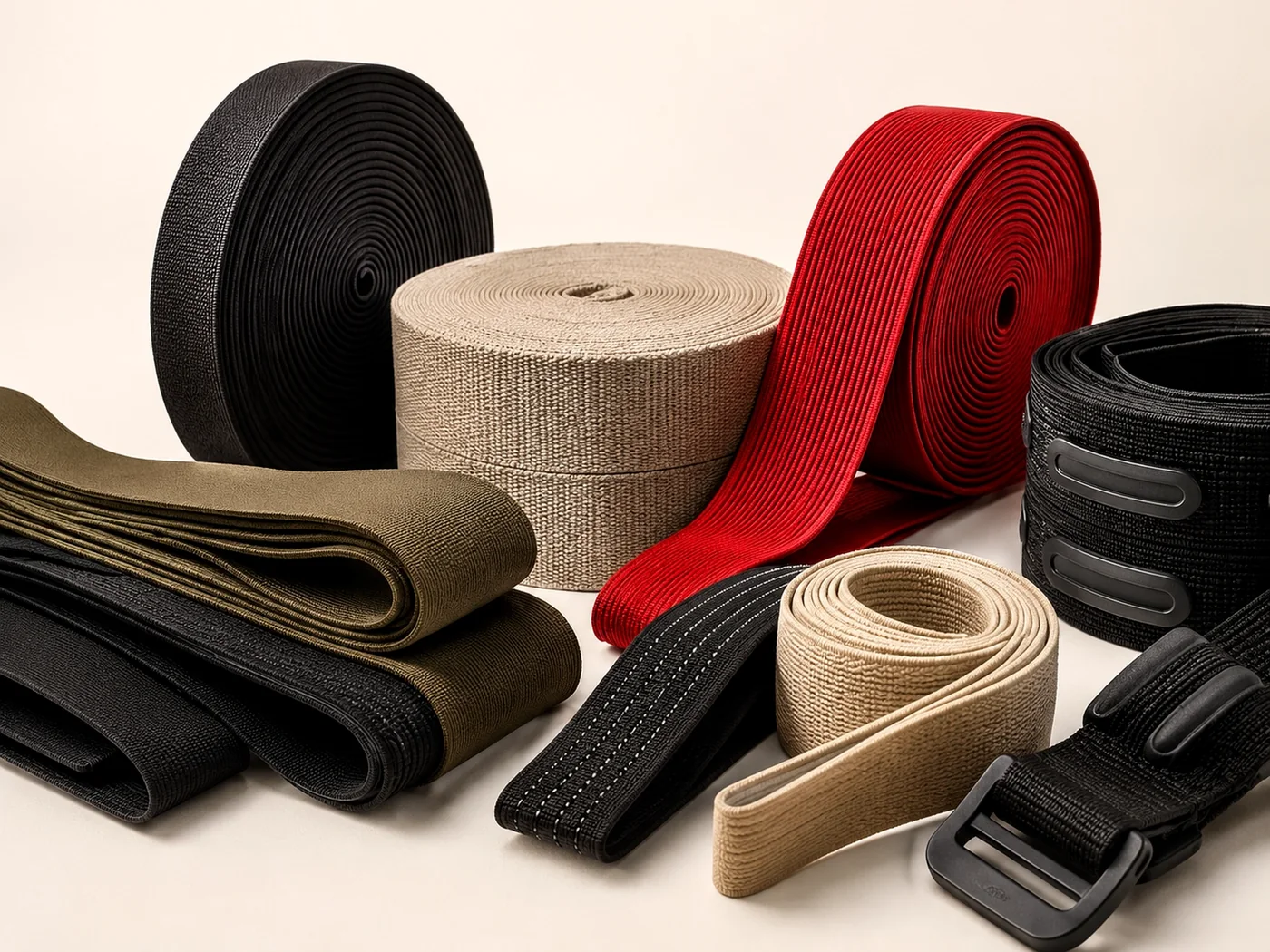
How to Choose Textile Elastic: 8 Technical Selection Criteria
The right textile elastic is not selected from product name alone. Form, dimension, recovery, surface, assembly method and real operating conditions should be evaluated as one system.
Custom color & sizeDirect manufacturer contactFast quotation process
Selection Guide
Selection GuideUpdated: Aug 29, 2026Bilge Örme Technical Content Team
30-SECOND SUMMARY
Quick answer: how to choose textile elastic
Start with the end use, not the catalog name.
Evaluate working stretch and recovery rather than maximum stretch alone.
Validate the elastic with the real seam, channel or hardware before volume production.
The right textile elastic is not selected from product name alone. Form, dimension, recovery, surface, assembly method and real operating conditions should be evaluated as one system. This guide is designed to help purchasing, product-development and production teams separate the key technical criteria and move directly to the relevant Bilge Örme product pages.
1. Choose the correct form
Decide whether the project needs round elastic cord, flat elastic, baby elastic, narrow woven elastic or a cord-and-accessory system. Form affects how tension is distributed and how the component integrates with the product.
2. Confirm size and available space
Width or diameter must fit the sewing channel, eyelet, cord lock or mechanical opening. Measurements should be taken on the actual assembly whenever possible.
3. Define working stretch and recovery
Specify how far the elastic will normally extend and how consistently it must return. A very high maximum stretch may not be useful if the product needs controlled tension in a much smaller range.
4. Evaluate surface, color and contact
Skin-contact applications require comfort and smooth edges, while technical applications may need grip or abrasion resistance. Visible products also need color and surface consistency.
5–8. Check assembly, winding, volume and sample
Test sewing or hardware compatibility, determine spool or winding needs, share estimated order volume and approve a physical sample. These four operational points often make the difference between a catalog match and a production-ready material.
TECHNICAL NOTE
A product name alone does not guarantee technical equivalence.
Size, surface, working stretch, recovery, sewing or connection method and the final operating conditions should be evaluated together. When replacing an existing component, a physical sample and real use case provide the strongest reference.
What is the most important elastic selection criterion?+
The end-use function is the starting point because it determines the relevant size, stretch, surface and assembly requirements.
Should maximum stretch be specified?+
Working stretch and recovery are often more useful than maximum extension alone.
Can the manufacturer recommend a product from a photo?+
A photo can narrow the family, but a physical sample and actual dimensions provide a much more reliable technical match.
CONTENT OWNERBilge Örme Technical Content Team
Our content is prepared around Bilge Örme product families and production-focused field experience to support better product selection. Order-specific technical values should be confirmed against the sample and project conditions. Review our technical content policy and production and quality approach.
This content is for general technical guidance. Final product suitability, production construction and performance values may vary according to order conditions and sample approval.