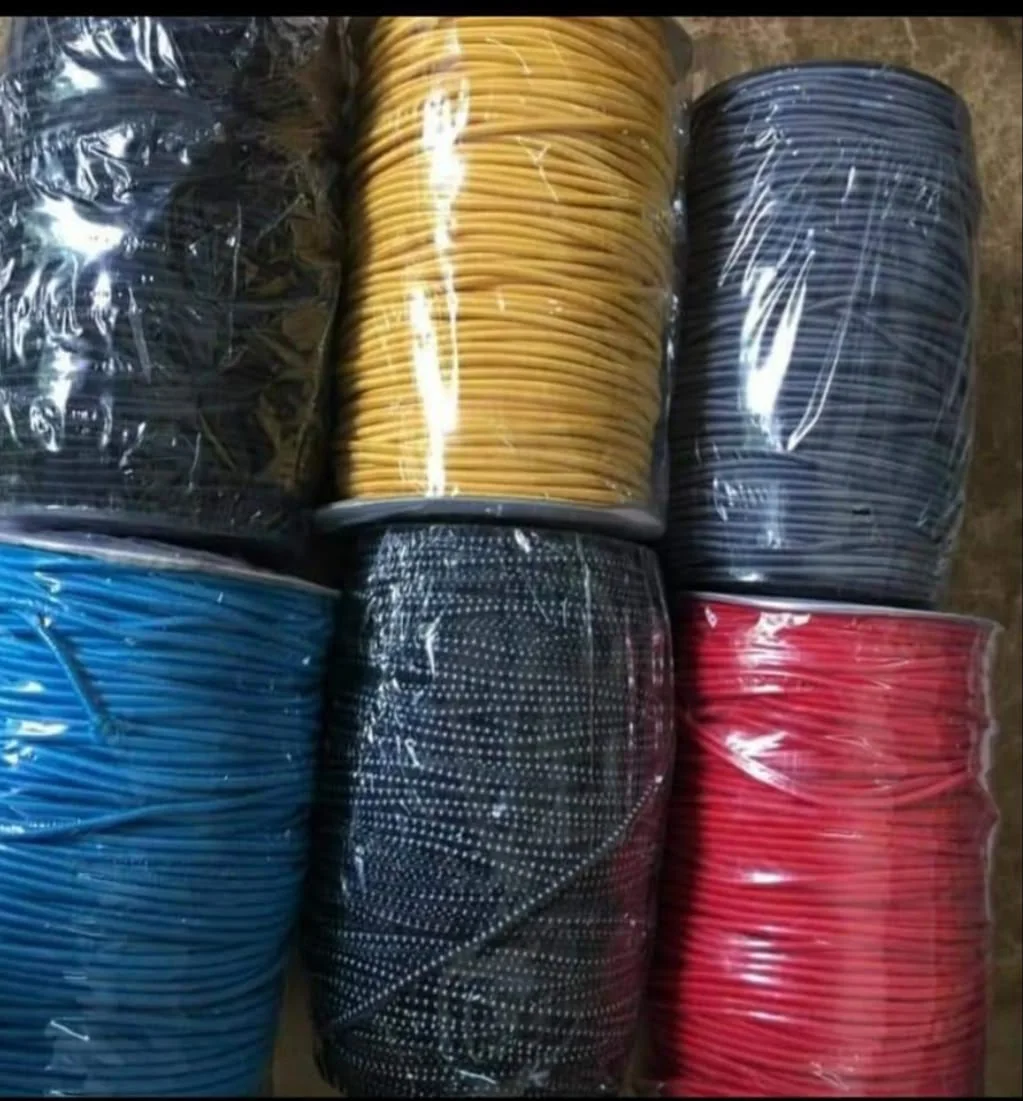
Selecting a strand class is a practical starting point, not the final technical decision. The actual cord diameter, recovery and intended hardware determine whether a 5-, 10-, 15-, 20- or 30-strand construction is suitable.
Custom color & sizeDirect manufacturer contactFast quotation process
Round Elastic
Round ElasticUpdated: Aug 29, 2026Bilge Örme Technical Content Team
30-SECOND SUMMARY
Quick answer: round elastic strand selection
Lower strand classes generally suit finer cords; higher classes generally create a fuller body.
Always confirm real diameter and recovery on a sample.
Cord-lock and channel compatibility should be tested before volume production.
Selecting a strand class is a practical starting point, not the final technical decision. The actual cord diameter, recovery and intended hardware determine whether a 5-, 10-, 15-, 20- or 30-strand construction is suitable. This guide is designed to help purchasing, product-development and production teams separate the key technical criteria and move directly to the relevant Bilge Örme product pages.
What changes as strand class increases?
As the product class increases, the cord generally becomes fuller and more substantial, although the exact relationship depends on the manufacturer’s yarn and braid construction. That is why strand count should be used together with an actual diameter measurement.
When is 5 or 10 strand useful?
Fine and light applications, small channels and compact accessories can benefit from lower-profile cords. A 5-strand or 10-strand option should still be checked for required recovery and abrasion resistance.
Where do 15 and 20 strand sit?
These mid-range classes can offer a balance between visible body and manageable size for apparel, bags, sports and outdoor products. The correct choice depends on the channel and the amount of restraint expected in the final assembly.
When should 30 strand be considered?
A fuller 30-strand construction can suit projects that need a more substantial elastic cord, but “thicker” is not automatically “better.” Oversized cord can create high friction, poor comfort or hardware incompatibility.
Use a sample to make the final choice
Compare actual diameter, working extension, recovery, surface friction and hardware fit. If the project is replacing an existing cord, sample-to-sample comparison is far more reliable than ordering from strand class alone.
TECHNICAL NOTE
A product name alone does not guarantee technical equivalence.
Size, surface, working stretch, recovery, sewing or connection method and the final operating conditions should be evaluated together. When replacing an existing component, a physical sample and real use case provide the strongest reference.
Strength cannot be determined from strand count alone; yarn, elastic core and construction all matter.
Can two manufacturers have different diameters for the same strand class?+
Yes. Strand naming is not a universal dimensional standard.
Should I select the cord lock before the elastic?+
They should be evaluated together because cord diameter and surface friction directly affect cord-lock performance.
CONTENT OWNERBilge Örme Technical Content Team
Our content is prepared around Bilge Örme product families and production-focused field experience to support better product selection. Order-specific technical values should be confirmed against the sample and project conditions. Review our technical content policy and production and quality approach.
This content is for general technical guidance. Final product suitability, production construction and performance values may vary according to order conditions and sample approval.