5-strand: fine and compact
5-strand products generally sit at the finer end of the family and can suit small channels, lightweight accessories and compact textile details where low bulk is useful.
5–30 strand terminology helps organize round elastic product classes, but it is not a universal diameter or strength standard. Actual dimensions and working behavior should always be confirmed.
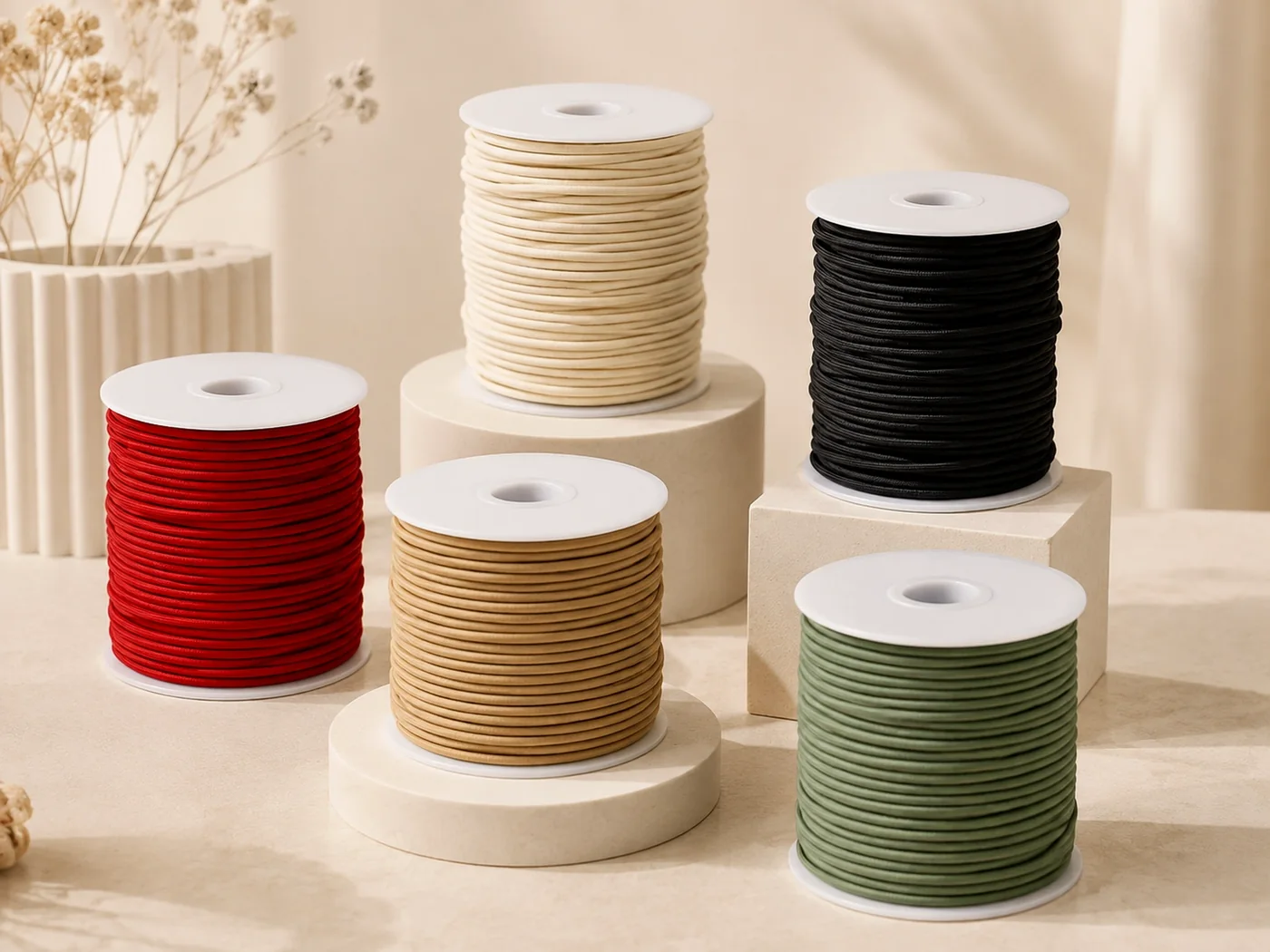
5–30 strand terminology helps organize round elastic product classes, but it is not a universal diameter or strength standard. Actual dimensions and working behavior should always be confirmed. This guide is designed to help purchasing, product-development and production teams separate the key technical criteria and move directly to the relevant Bilge Örme product pages.
5-strand products generally sit at the finer end of the family and can suit small channels, lightweight accessories and compact textile details where low bulk is useful.
10-strand constructions can bridge fine and medium applications, including apparel, bags and footwear, provided the actual diameter and recovery match the design.
15-strand elastic often provides a more substantial round profile without moving into the largest cord classes. It can be useful where both visibility and controlled stretch matter.
These classes generally offer a larger body for outdoor, bag, accessory and technical projects. Hardware and channel compatibility become increasingly important as the cord grows.
Strand labels are product-family references, not universal engineering dimensions. Compare actual diameter, force, recovery, surface and cord-lock performance before mass production.
Size, surface, working stretch, recovery, sewing or connection method and the final operating conditions should be evaluated together. When replacing an existing component, a physical sample and real use case provide the strongest reference.
No. Strength cannot be inferred from strand count alone.
Yes. Yarn, braid density and production method can change actual diameter.
Use physical samples and test them in the final channel, hardware and working extension.
Our content is prepared around Bilge Örme product families and production-focused field experience to support better product selection. Order-specific technical values should be confirmed against the sample and project conditions. Review our technical content policy and production and quality approach.
Talk directly with the manufacturer about recurring production, custom colors, winding and packaging requirements.