How should width be matched to the channel?
The elastic should run through or sit within the sewing channel without folding or creating unnecessary friction. Allow for seam allowance and the way the elastic is fed during production.
Flat elastic width should be selected from the sewing channel and final function, not from a larger-is-better assumption. 3, 5, 7 and 10 mm options serve different contact and profile requirements.
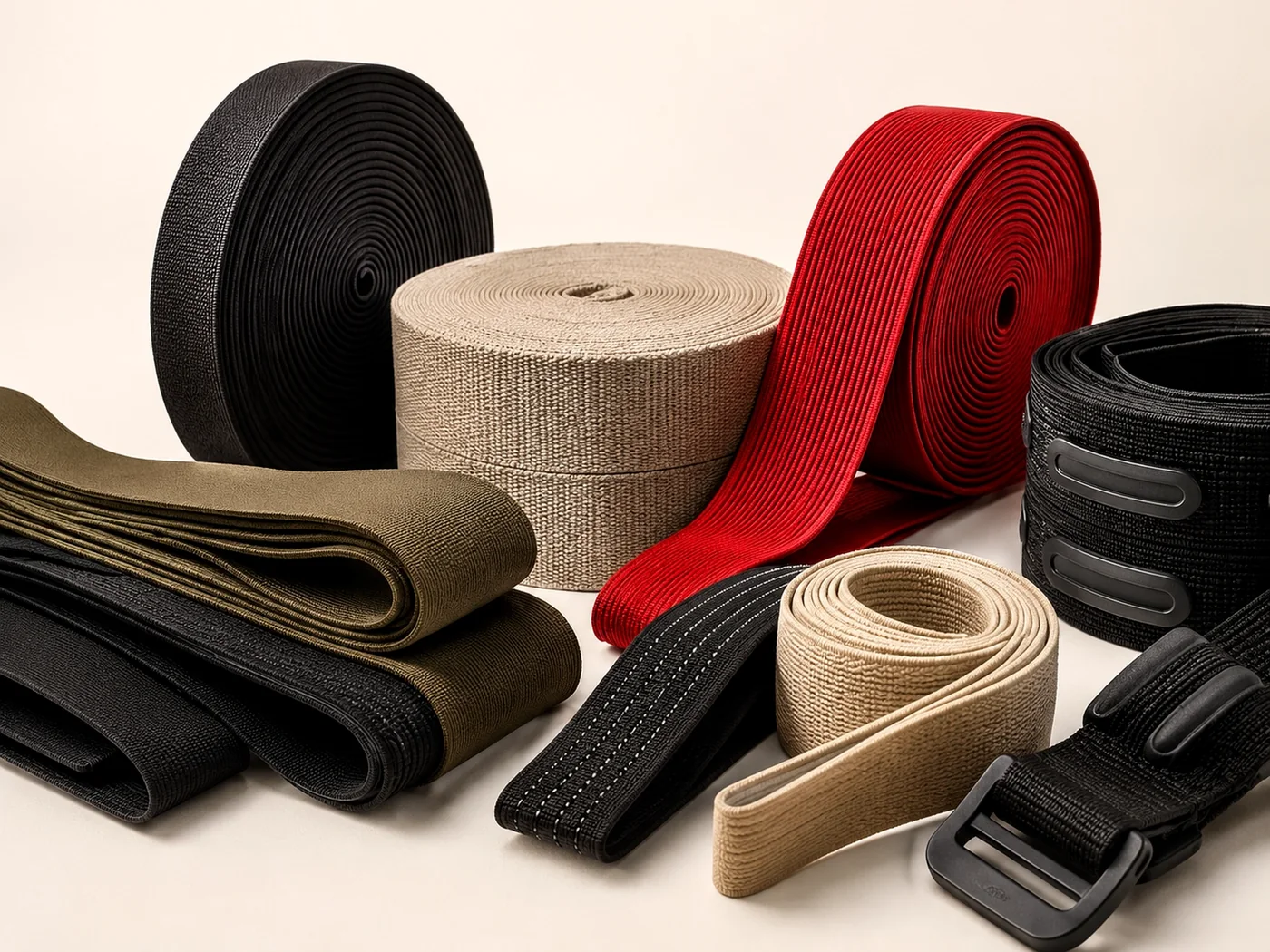
Flat elastic width should be selected from the sewing channel and final function, not from a larger-is-better assumption. 3, 5, 7 and 10 mm options serve different contact and profile requirements. This guide is designed to help purchasing, product-development and production teams separate the key technical criteria and move directly to the relevant Bilge Örme product pages.
The elastic should run through or sit within the sewing channel without folding or creating unnecessary friction. Allow for seam allowance and the way the elastic is fed during production.
3 mm flat elastic suits compact, lightweight and low-profile applications where space is limited and only a small contact area is required.
Both are versatile apparel widths. The 7 mm option offers a broader surface, while 5 mm reduces bulk. The difference should be evaluated with the garment structure, stretch requirement and stitch pattern.
10 mm flat elastic can distribute force over a wider area and create a more pronounced support zone. It should still be checked for skin comfort and channel compatibility.
Confirm width, working stretch, recovery, color, sewing behavior, spool length and estimated volume. A stitched prototype is particularly valuable when the elastic contacts skin or is visible in the final product.
Size, surface, working stretch, recovery, sewing or connection method and the final operating conditions should be evaluated together. When replacing an existing component, a physical sample and real use case provide the strongest reference.
A sample is a strong reference, but the final product geometry and required performance should also be considered.
No. Tension depends on construction and elastic core, not width alone.
They can overlap, but their profile and contact area differ significantly, so the final design determines suitability.

Our content is prepared around Bilge Örme product families and production-focused field experience to support better product selection. Order-specific technical values should be confirmed against the sample and project conditions. Review our technical content policy and production and quality approach.
Talk directly with the manufacturer about recurring production, custom colors, winding and packaging requirements.