1–3. Apparel, underwear and childrenswear
Waists, cuffs, underwear and childrenswear prioritize comfort, recovery and sewing behavior. Flat elastic, baby elastic and narrow woven elastic are common depending on width and contact requirements.
Textile elastic appears in many industries, but the required form changes with the job. Understanding the application first helps determine whether round cord, flat elastic, baby elastic or narrow woven elastic is appropriate.
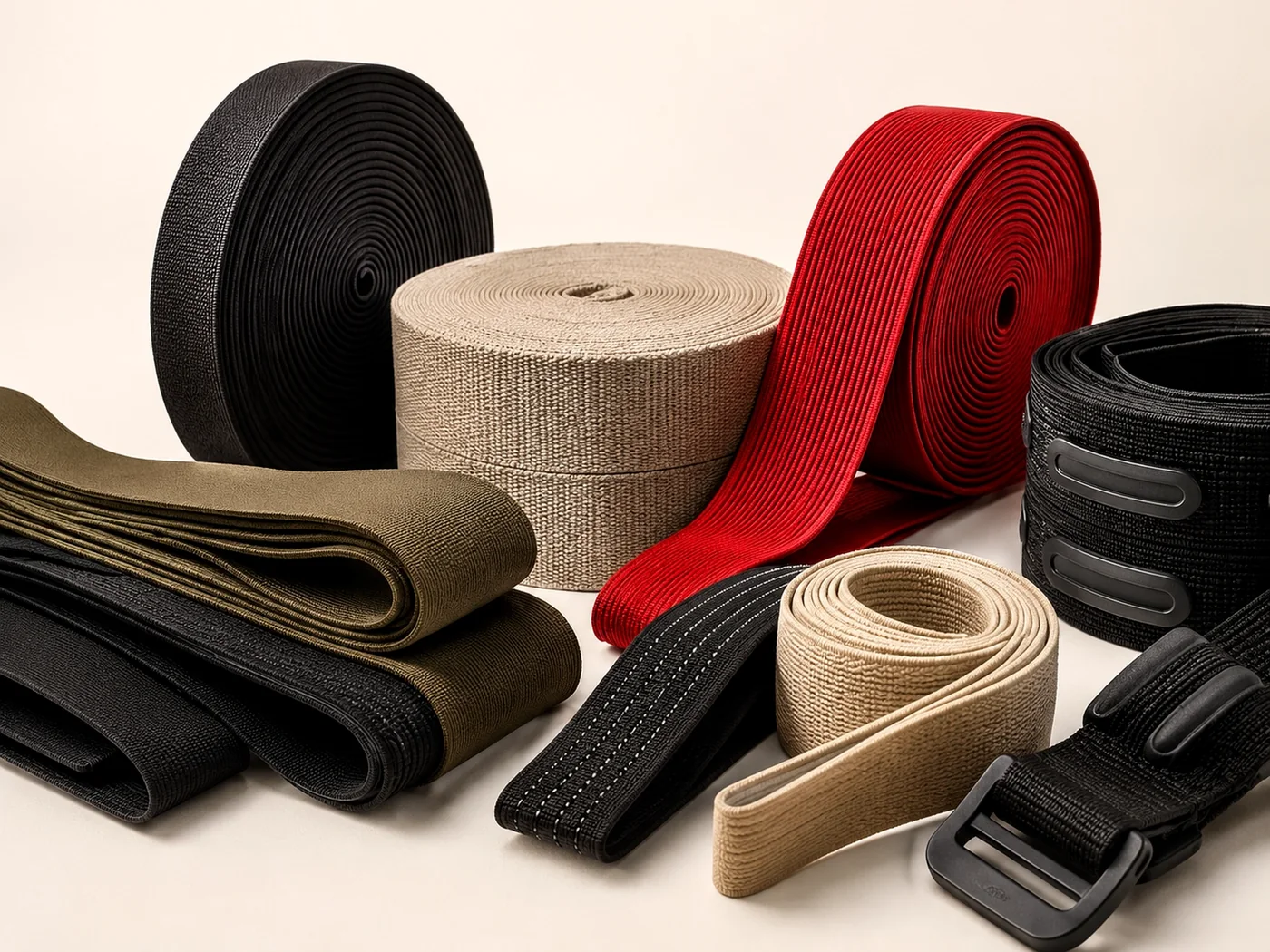
Textile elastic appears in many industries, but the required form changes with the job. Understanding the application first helps determine whether round cord, flat elastic, baby elastic or narrow woven elastic is appropriate. This guide is designed to help purchasing, product-development and production teams separate the key technical criteria and move directly to the relevant Bilge Örme product pages.
Waists, cuffs, underwear and childrenswear prioritize comfort, recovery and sewing behavior. Flat elastic, baby elastic and narrow woven elastic are common depending on width and contact requirements.
Sportswear may use visible elastic and adjustment cords, footwear often combines cords with locks, and bags use elastic for pockets, compression and securing. Hardware compatibility becomes increasingly important in these products.
Outdoor products can expose elastic to abrasion and weather, furniture applications may need sustained support, and protective textiles can require controlled fit. These conditions should be included in the specification.
These applications can introduce specialized comfort, assembly, repeatability or environmental requirements. Product suitability should be validated for the actual application rather than inferred from a general product name.
Start with the function, available space, working extension, surface contact and expected quantity. Then compare Bilge Örme product families or use the product finder to narrow the options.
Size, surface, working stretch, recovery, sewing or connection method and the final operating conditions should be evaluated together. When replacing an existing component, a physical sample and real use case provide the strongest reference.
Flat elastic and narrow woven elastic are common, but the correct choice depends on width, comfort and sewing construction.
Round elastic cord, narrow woven elastic and cord-lock systems are common depending on the securing function.
No. Each sector can impose different form, recovery, surface and durability requirements.
Our content is prepared around Bilge Örme product families and production-focused field experience to support better product selection. Order-specific technical values should be confirmed against the sample and project conditions. Review our technical content policy and production and quality approach.
Talk directly with the manufacturer about recurring production, custom colors, winding and packaging requirements.