Why should cord and lock be selected together?
The lock relies on geometry and friction to grip the cord. If the cord is too thin it may slip; if it is too thick, adjustment can become difficult or the lock may not close correctly.
Shock cord and cord locks should be selected as one mechanical-textile system. A good cord can perform poorly in an incompatible lock, and a good lock cannot compensate for the wrong cord diameter or surface.
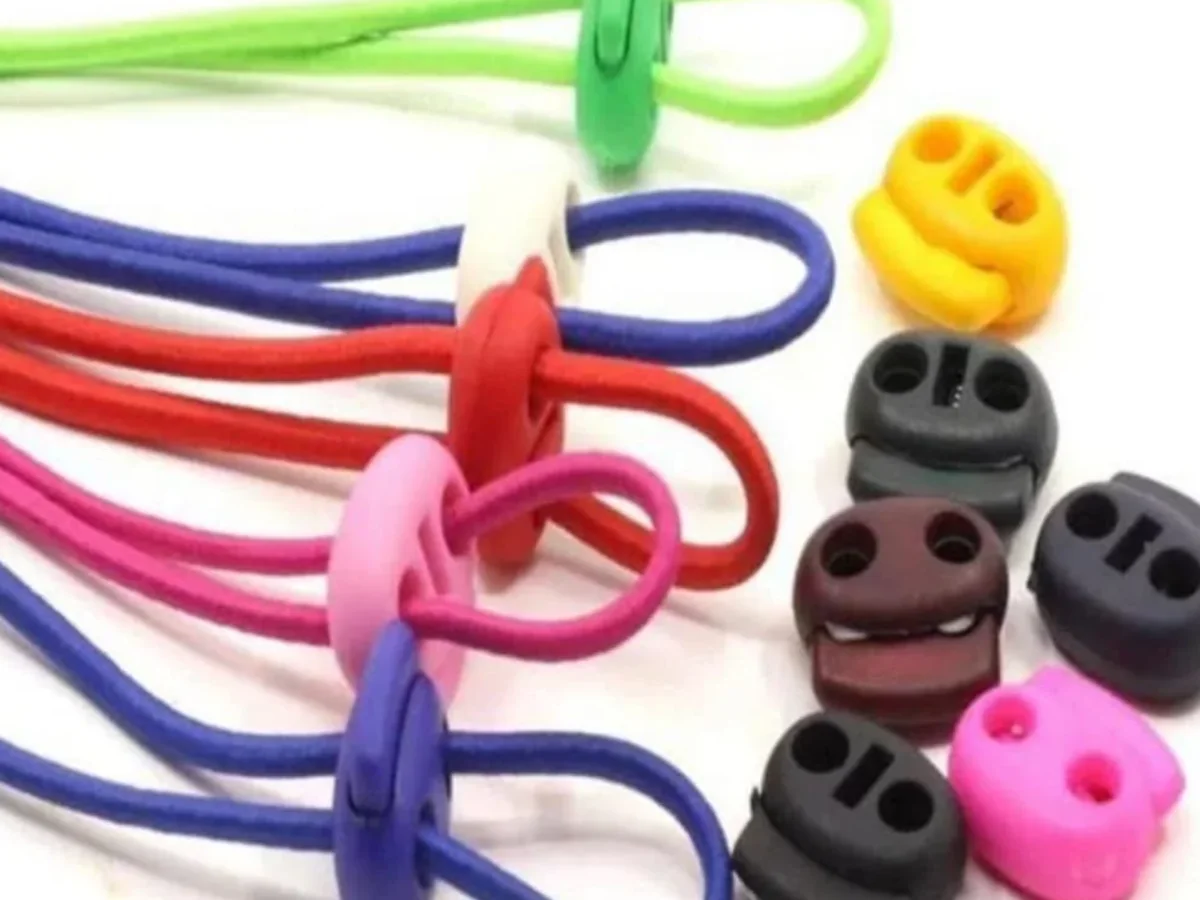
Shock cord and cord locks should be selected as one mechanical-textile system. A good cord can perform poorly in an incompatible lock, and a good lock cannot compensate for the wrong cord diameter or surface. This guide is designed to help purchasing, product-development and production teams separate the key technical criteria and move directly to the relevant Bilge Örme product pages.
The lock relies on geometry and friction to grip the cord. If the cord is too thin it may slip; if it is too thick, adjustment can become difficult or the lock may not close correctly.
Nominal product names are not enough. Measure the actual relaxed cord and evaluate how its diameter changes under tension, especially when passing through a tight lock channel.
A smooth braid may slide easily but require more locking force. A textured surface may grip more strongly but increase adjustment friction. The intended user experience should guide the balance.
The cord lock should be operable by the target user while maintaining the necessary hold. Gloves, outdoor use and repeated adjustments can change the ergonomic requirement.
Use the actual cord, lock, end fitting and attachment geometry. Cycle the system repeatedly and verify holding, release and recovery before production.
Size, surface, working stretch, recovery, sewing or connection method and the final operating conditions should be evaluated together. When replacing an existing component, a physical sample and real use case provide the strongest reference.
No. Diameter, surface and lock geometry need to be compatible.
Both conditions matter because diameter and surface behavior can change under tension.
Cord and accessory combinations can be evaluated as a project-specific solution.
Our content is prepared around Bilge Örme product families and production-focused field experience to support better product selection. Order-specific technical values should be confirmed against the sample and project conditions. Review our technical content policy and production and quality approach.
Talk directly with the manufacturer about recurring production, custom colors, winding and packaging requirements.