Check available width in the assembly
Measure the actual channel, seam allowance and stitch location. The elastic should remain flat without rubbing excessively against the channel walls or folding under the stitch.
7 mm flat elastic provides a noticeably broader contact surface than fine 3–5 mm options. The correct choice balances fit within the channel, comfort, recovery and the visual or technical requirements of the finished product.
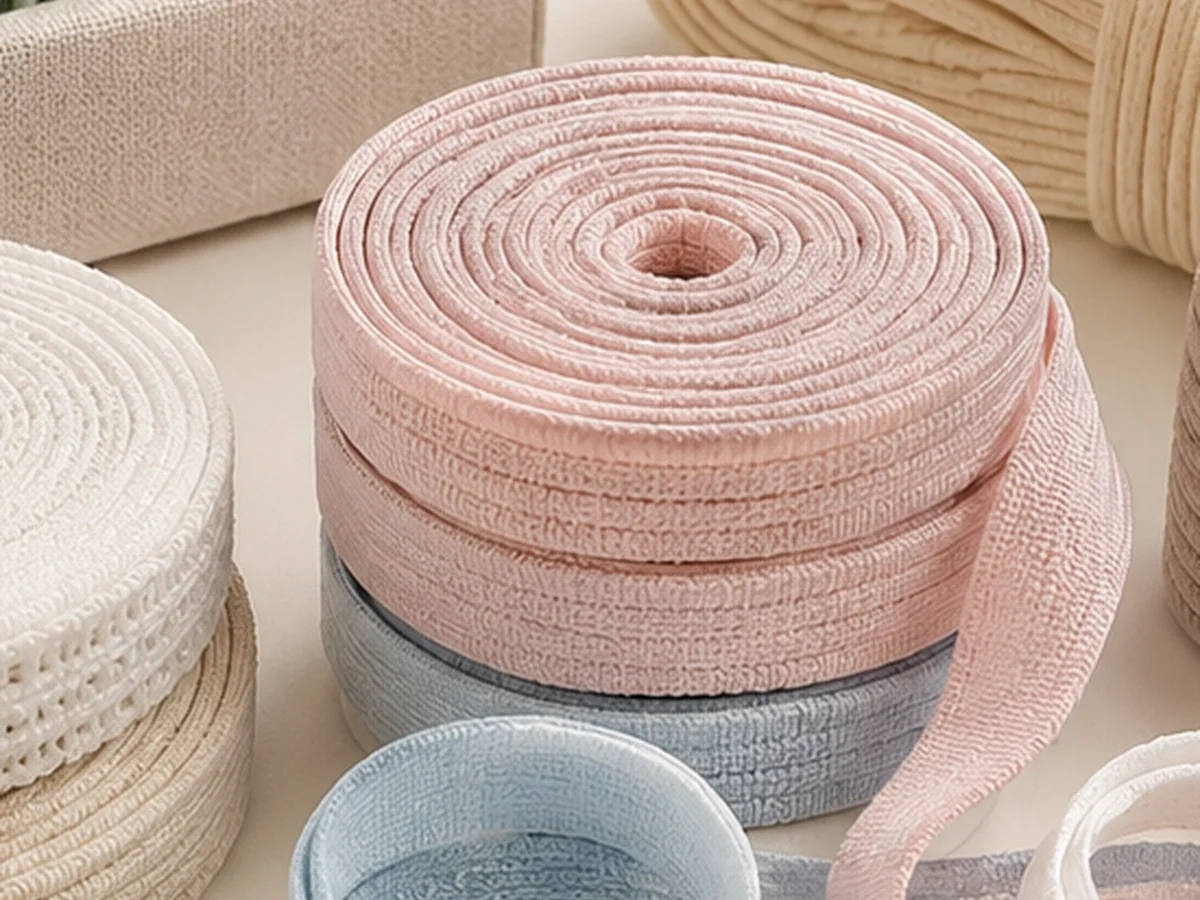
7 mm flat elastic provides a noticeably broader contact surface than fine 3–5 mm options. The correct choice balances fit within the channel, comfort, recovery and the visual or technical requirements of the finished product. This guide is designed to help purchasing, product-development and production teams separate the key technical criteria and move directly to the relevant Bilge Örme product pages.
Measure the actual channel, seam allowance and stitch location. The elastic should remain flat without rubbing excessively against the channel walls or folding under the stitch.
Compared with 3 or 5 mm, a 7 mm tape spreads force over a larger area. This can improve support, but the construction can still feel too firm if the elastic force is not appropriate for the application.
Test the extension normally used in the product rather than only maximum stretch. The tape should return consistently after repeated cycles without becoming permanently elongated.
For skin-contact products, edge feel and sewing stiffness matter. In visible applications, color and surface should be approved under realistic lighting and after the expected manufacturing process.
Confirm spool length, packaging and volume before mass production. Operational details can influence efficiency and should be part of the product specification, not left until shipment.
Size, surface, working stretch, recovery, sewing or connection method and the final operating conditions should be evaluated together. When replacing an existing component, a physical sample and real use case provide the strongest reference.
No. Width changes contact area, while actual tension and durability depend on the construction.
It can in suitable products, but edge feel, tension and sewing behavior should be tested for comfort.
The winding format affects production-line feeding, storage and handling efficiency.
Our content is prepared around Bilge Örme product families and production-focused field experience to support better product selection. Order-specific technical values should be confirmed against the sample and project conditions. Review our technical content policy and production and quality approach.
Talk directly with the manufacturer about recurring production, custom colors, winding and packaging requirements.