Measure the finished channel
Seam allowance and stitching can reduce the usable channel width. Measure the sewn sample and leave enough clearance for the elastic to move or lie flat as intended.
Baby elastic size should fit the finished sewing channel and provide controlled tension without creating unnecessary pressure or twisting. Fine widths require careful seam and recovery testing.
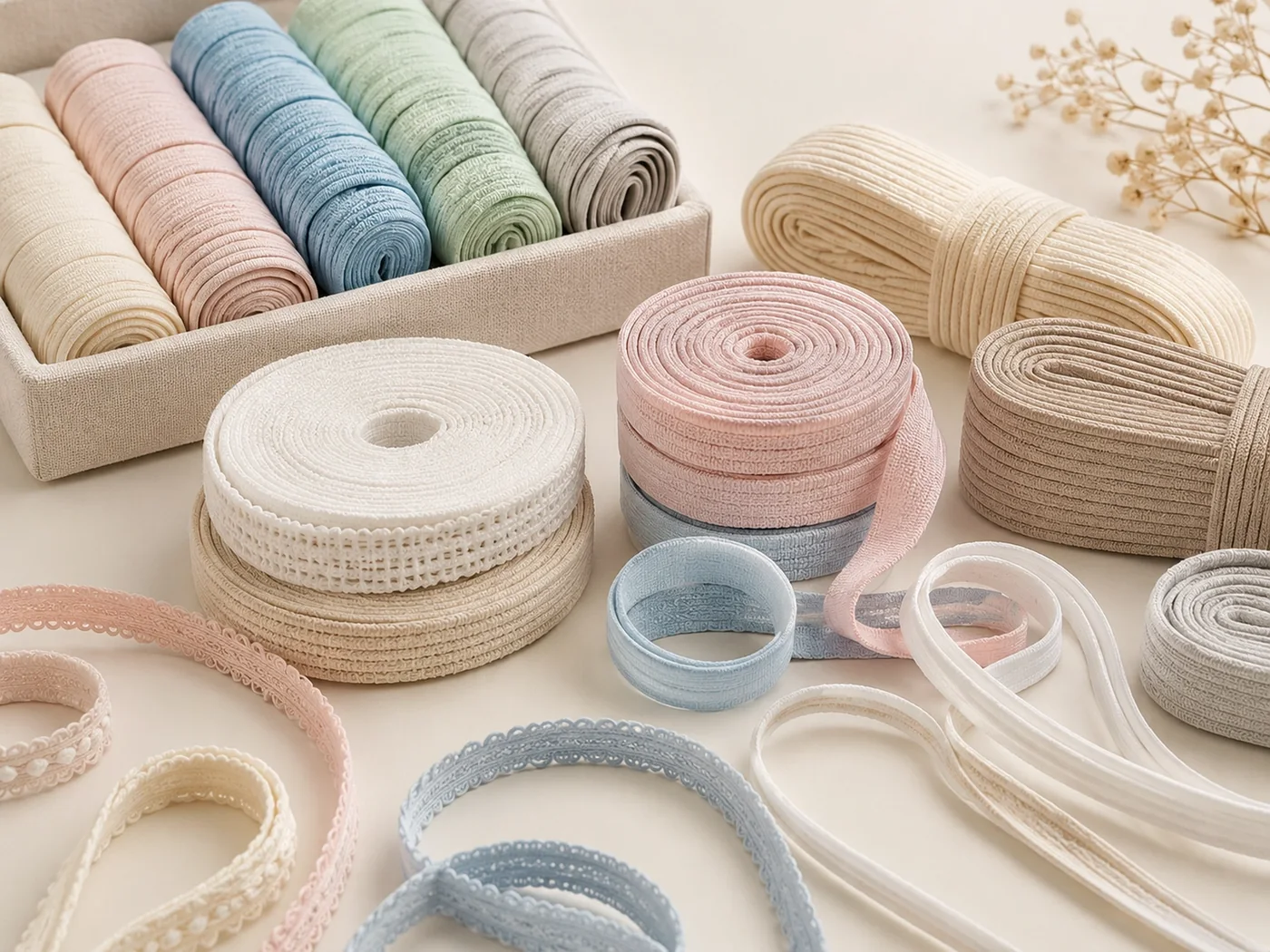
Baby elastic size should fit the finished sewing channel and provide controlled tension without creating unnecessary pressure or twisting. Fine widths require careful seam and recovery testing. This guide is designed to help purchasing, product-development and production teams separate the key technical criteria and move directly to the relevant Bilge Örme product pages.
Seam allowance and stitching can reduce the usable channel width. Measure the sewn sample and leave enough clearance for the elastic to move or lie flat as intended.
Very fine elastic concentrates force over a small surface. Sensitive or skin-contact applications may require a softer construction or a slightly broader width to improve comfort.
A narrow elastic can rotate inside a loose channel or distort under an unsuitable stitch. Test the full seam construction before approving the width.
The elastic should operate comfortably within the extension range of the garment or textile component. Excessive tension can create pressure, while insufficient tension can reduce fit and function.
When both are possible, compare flat and ribbed versions under the same sewing conditions.
Size, surface, working stretch, recovery, sewing or connection method and the final operating conditions should be evaluated together. When replacing an existing component, a physical sample and real use case provide the strongest reference.
Not necessarily. Some clearance may be needed to prevent friction or folding, depending on the construction.
Narrow width concentrates force, so the elastic construction and working extension must be balanced for comfort.
It is strongly recommended for sensitive and skin-contact applications.

Our content is prepared around Bilge Örme product families and production-focused field experience to support better product selection. Order-specific technical values should be confirmed against the sample and project conditions. Review our technical content policy and production and quality approach.
Talk directly with the manufacturer about recurring production, custom colors, winding and packaging requirements.