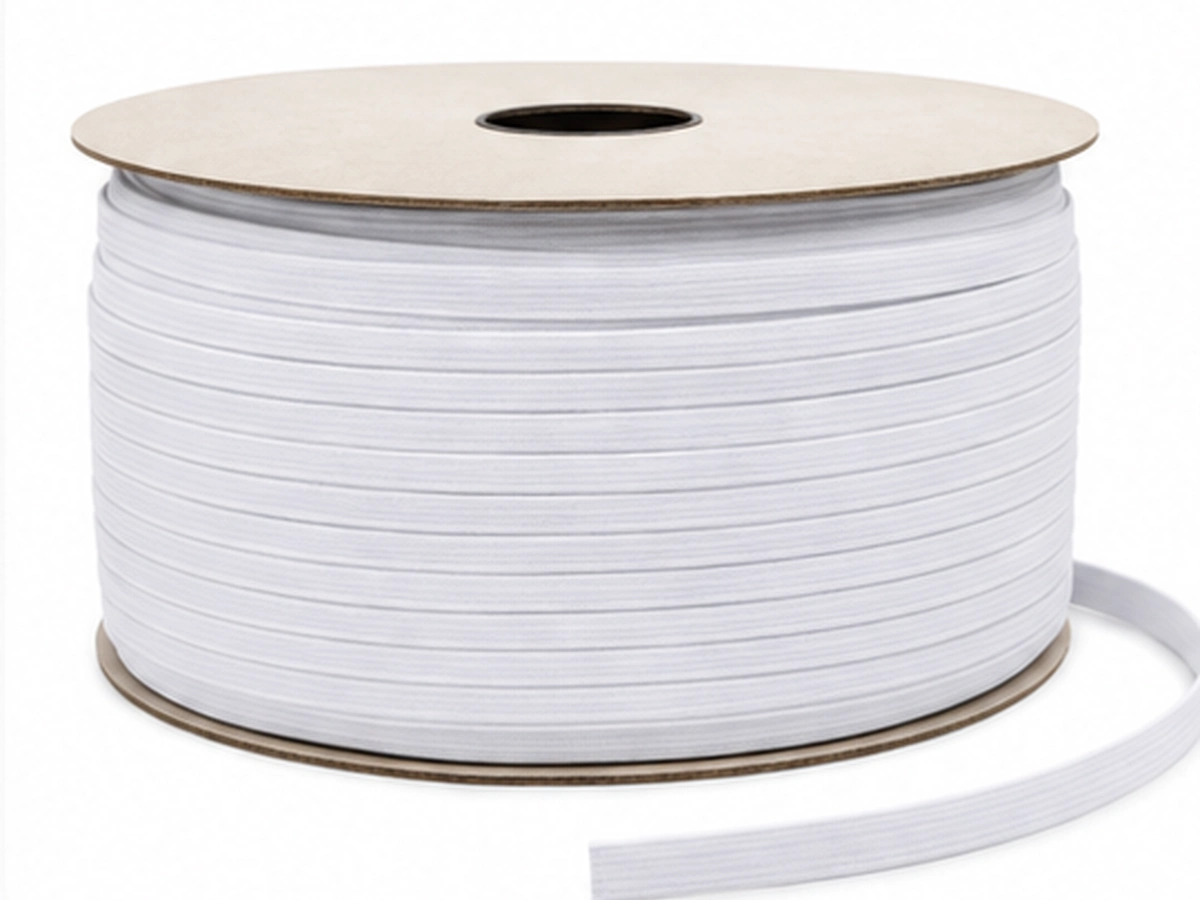
3 mm Flat Elastic Applications and Selection Guide
3 mm flat elastic is a low-profile option for applications with limited space and relatively small contact areas. Its suitability depends on sewing-channel geometry, recovery and comfort rather than width alone.
Custom color & sizeDirect manufacturer contactFast quotation process
Flat Elastic
Flat ElasticUpdated: Aug 29, 2026Bilge Örme Technical Content Team
30-SECOND SUMMARY
Quick answer: 3 mm flat elastic
3 mm is useful where a narrow channel and low bulk are important.
Fine elastic should be checked for twisting and pressure concentration.
Prototype sewing is recommended before recurring production.
3 mm flat elastic is a low-profile option for applications with limited space and relatively small contact areas. Its suitability depends on sewing-channel geometry, recovery and comfort rather than width alone. This guide is designed to help purchasing, product-development and production teams separate the key technical criteria and move directly to the relevant Bilge Örme product pages.
Why choose a 3 mm width?
A 3 mm elastic occupies very little space, which can be useful in narrow channels, lightweight components and designs where the elastic should remain visually discreet. The same low profile, however, means the force is distributed across a smaller surface.
Apparel and lightweight textile uses
Fine elastics can be used in selected apparel details, light accessories, masks and compact sewn components. The surrounding fabric should be stable enough to prevent the narrow elastic from rolling or cutting into the seam.
Sewing-channel compatibility
Measure the finished channel after seam allowance rather than relying only on the pattern width. The elastic should feed without excessive friction and should remain flat after stitching and repeated stretch.
Recovery and comfort checks
A narrow elastic may feel firm if its construction generates high tension. Test the working extension and pressure on the final product, particularly when the elastic contacts skin.
When to move to 5 mm or wider
If the project needs more contact area, easier handling or reduced pressure concentration, compare 5 mm flat elastic and wider alternatives before finalizing the design.
TECHNICAL NOTE
A product name alone does not guarantee technical equivalence.
Size, surface, working stretch, recovery, sewing or connection method and the final operating conditions should be evaluated together. When replacing an existing component, a physical sample and real use case provide the strongest reference.
Is 3 mm flat elastic suitable for every narrow channel?+
No. The channel, fabric, tension and sewing method must still be compatible.
Can 3 mm elastic twist after sewing?+
It can if the channel or stitch configuration does not support the narrow tape correctly.
When should I select a wider elastic?+
Choose a wider option when more contact area, stability or load distribution is needed.
CONTENT OWNERBilge Örme Technical Content Team
Our content is prepared around Bilge Örme product families and production-focused field experience to support better product selection. Order-specific technical values should be confirmed against the sample and project conditions. Review our technical content policy and production and quality approach.
This content is for general technical guidance. Final product suitability, production construction and performance values may vary according to order conditions and sample approval.